Container Registry asset operations
Add an asset
Org Admin and Team Users have permission to add assets.
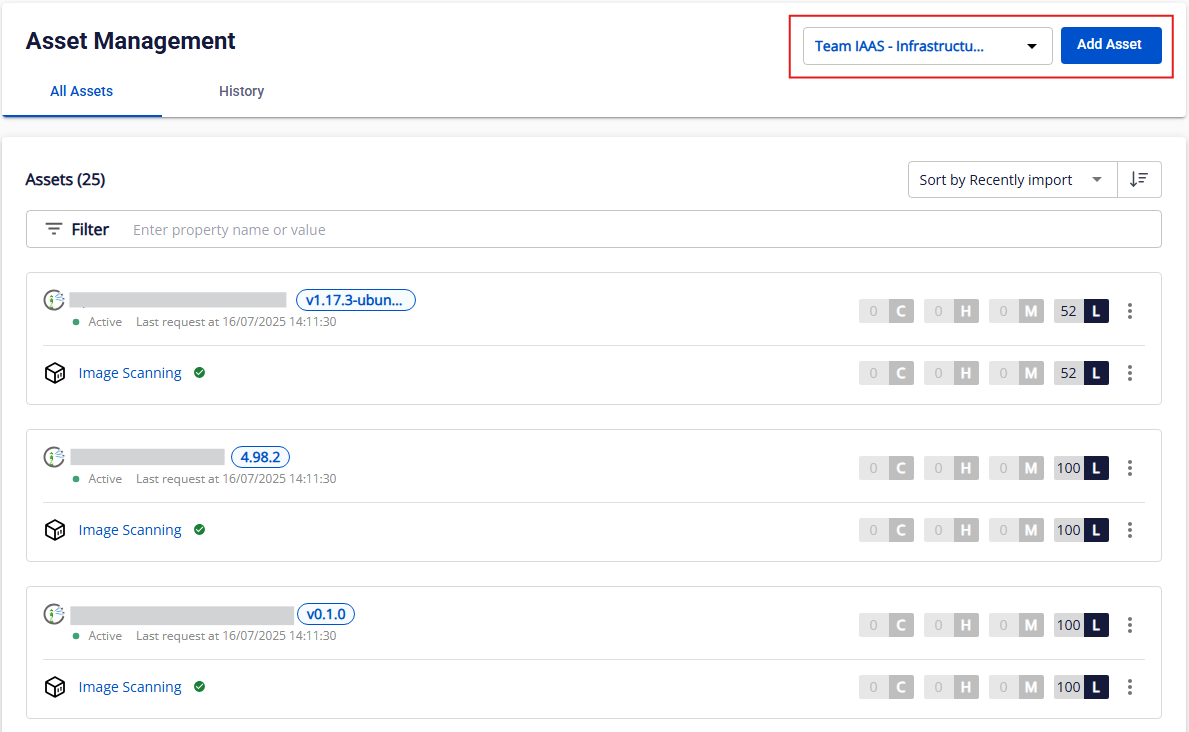
Step 1: After selecting a team, click Add Asset.
Step 2: Select FPT Container Registry or Harbor.
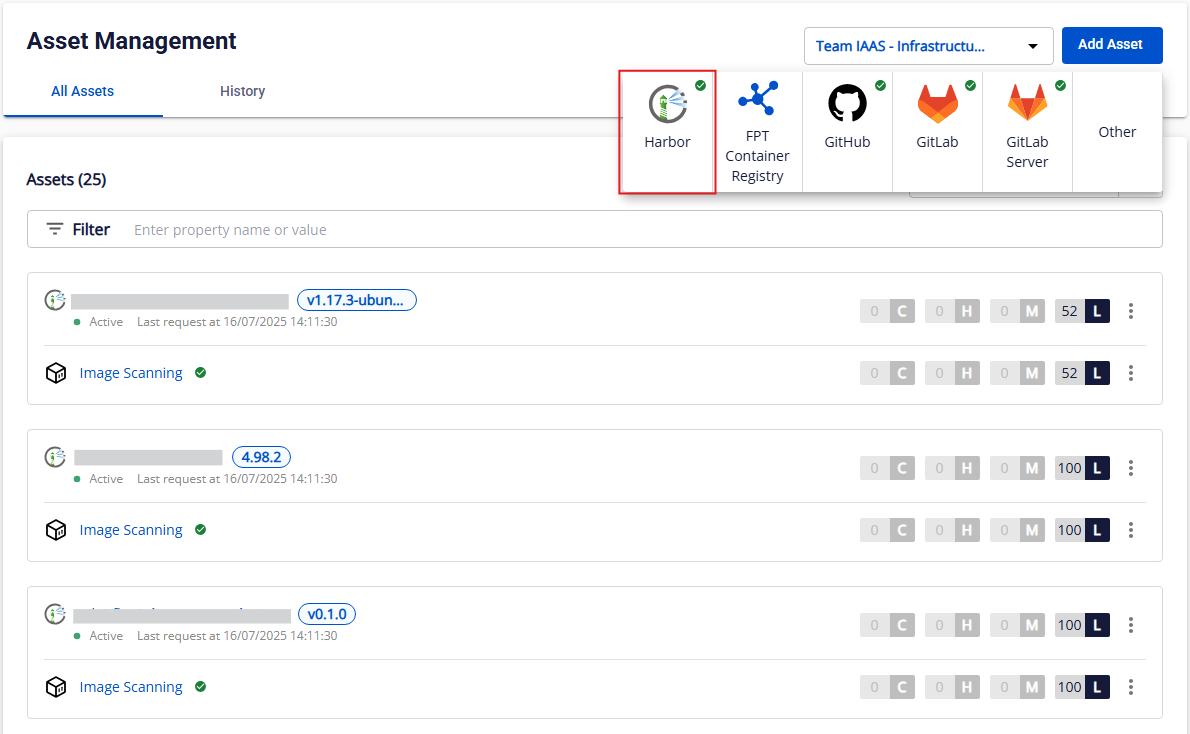
Note: The add asset popup only appears when the asset source (FPT Container Registry/Harbor) has been integrated in the Integration screen. If you click a source that has not been integrated yet, the system redirects to the Integration tab for that source.
Step 3: Select the project containing the image to scan.
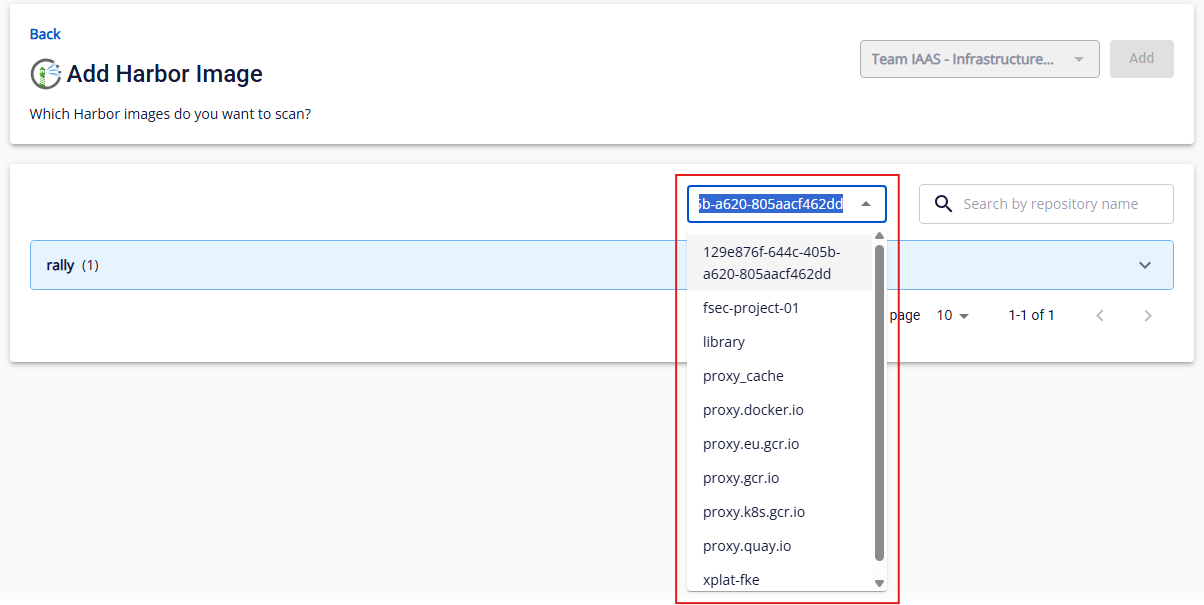
The screen displays available Images and Image Tags.
Step 4: Select the image you want and click Add.
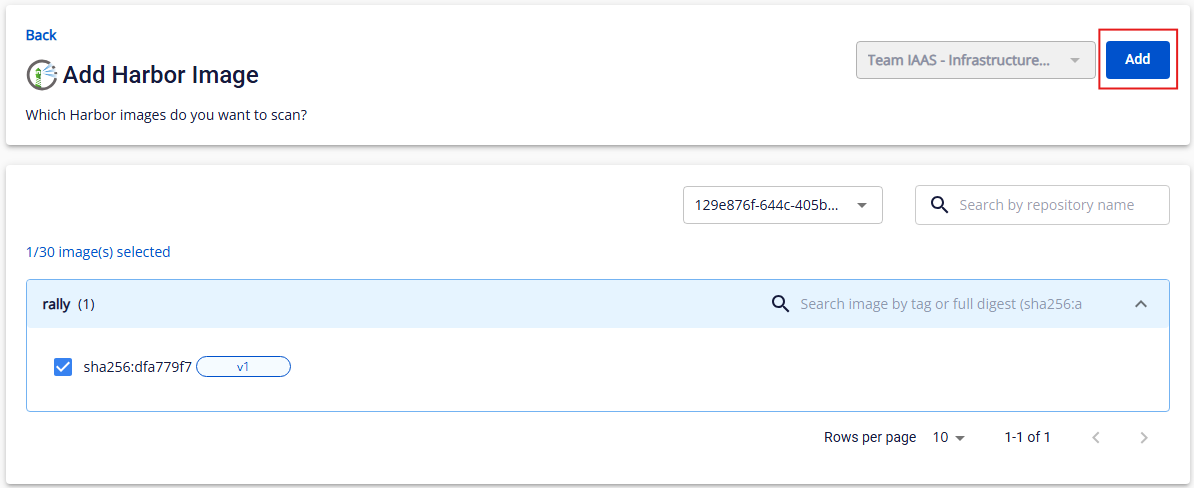
After successfully adding, the system automatically runs the first scan and displays results in the Asset Management All Assets tab. You can view add history in the History tab.
View asset overview
Step 1: In Asset Management > All, click any CR Asset Name link.
Step 2: On the Asset Overview screen, you can view:
- General information: Asset Name, Asset Access (Public/Private), Status, Owner, Added By, Added At
- Metadata (Issue Information): Image ID, Manifest Digest, Image Tag, Image VPC, Base Image, Platform, Target OS, Image Size
- Issue overview: Scan Type (click to see details by type), Scan Time, Total Open Issues, Severity counts, Scanning Times By Day (last 7 days)
- Latest requests: Up to 3 most recent scan requests (Scanned By, Scanned At, scan result)
View issues
Access the Issue list
See the SCM asset guide.
Issue information
Each issue is displayed as an Issue Info Card with:
- Severity: Critical/High/Medium/Low
- Package Name or Secret Name
- Issue Title
- Vul References: CWE/CVE/CVSS
- Score: 0–10 (one decimal place)
- Issue Status: current status from the most recent scan
- Exploit Status: whether the issue has been exploited
- Image Layer: the Dockerfile command or layer causing the issue
- Fixed in Version: the patched package version; "Not available" if no fix exists
Filter, search, and sort issues
Filter by: Severity, Status, Priority Score (0–10), Issue Type, "Fixed in" available, Image Layer, Exploit Maturity, Exploit Status.
Search by: Issue ID, Issue Title. Press Enter to search; Clear to reset.
Sort by: Severity (C→H→M→L), Score, Created Time. Default: Score descending.
View issue details
Step 1: Click Details on any issue card (Image) to open the Issue Detail popup.
Step 2: The Issue Detail screen shows: Severity, Package Name, Vulnerability Type, Link, Issue Status, Issue Description, Issue Remediation (Current package, Fixed in version), Security Information (CVSS score, attack vector), References, Manifest Layer, Code Block, and Activity log.
Rescan, disable/enable, and delete assets
See the SCM asset guide.